
Glacier Kayaking in Iceland - What to expect?
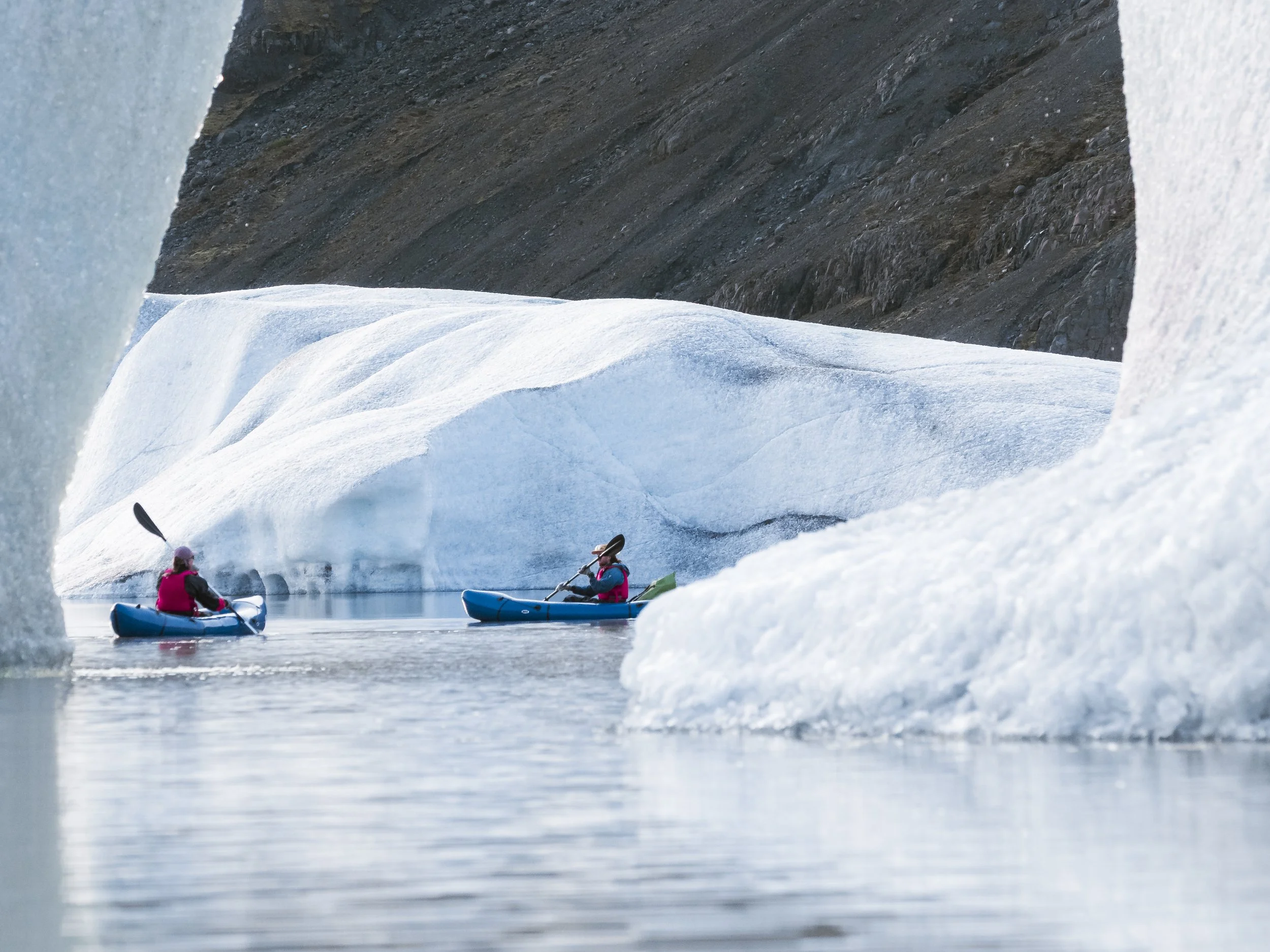
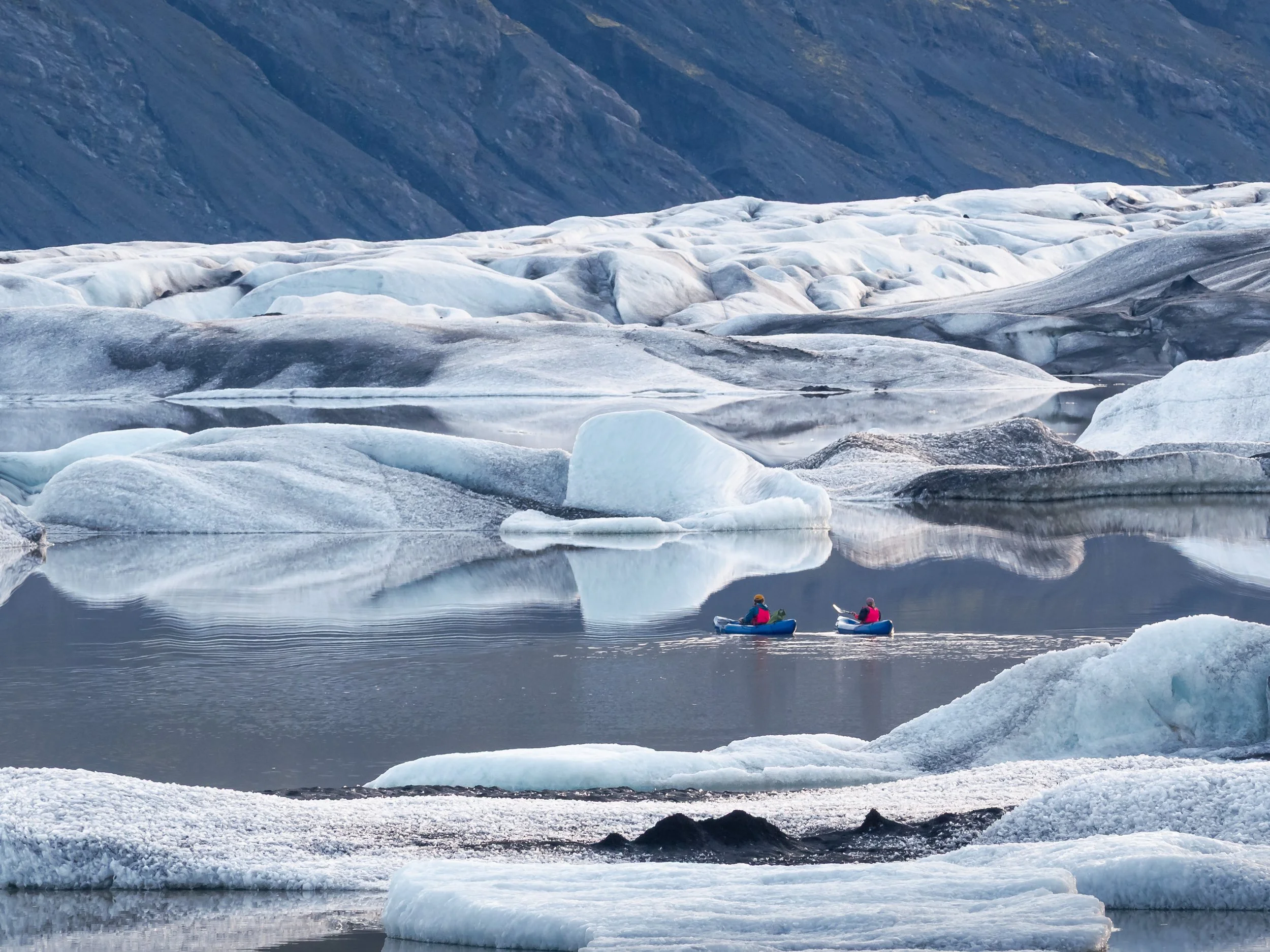
Floating in silence, surrounded by the reflections of mountains, icebergs and glacier in a mirror still lake. Kayaking next to the glaciers is one of our favorite activities in Iceland: not only are there breathtaking sights, moments of complete serenity and a real feeling of being in nature, but it also allows us to explore some difficult-to-reach places that are inaccessible on foot- places which are becoming increasingly more common as the glaciers retreat and fast growing lakes take their place.
In this article, we’ll go over what to expect on the day of your tour, including the logistics and preparation- not just the Instagram worthy highlights!
What do we mean by glacier kayaking?
Simply put, glacier kayaking is our term for any paddling that takes place in a lake or lagoon at the glacier’s edge. These lakes form in depressions which have been created by glacial erosion, and fill with meltwater as the glacier retreats. When we say glacier kayaking, we mean kayaking in proximity to icebergs and the glacier itself- not in any old lake which happens to be near the glacier!
Where can I go glacier kayaking?
There are now lakes in front of each major outlet glacier in southeast Iceland;if you have your own kayak then you are spoiled for choice! We run tours at Heinabergslón and Fláajökull, as these locations have ticked all our boxes for creating memorable tours which combine hiking and kayaking in beautiful and remote nature, away from the usual tourist hotspots.
Preparation
Preparation for your trip begins at home, before you set off to Iceland! It is important that you pack clothing and shoes appropriate for an Icelandic outdoor adventure- this means some warm layers, some waterproof layers, hat, gloves and good hiking boots.
On the day of your tour, we begin by reviewing the forecast and deciding what clothing is appropriate. For more info on what we recommend, see our FAQ section here.
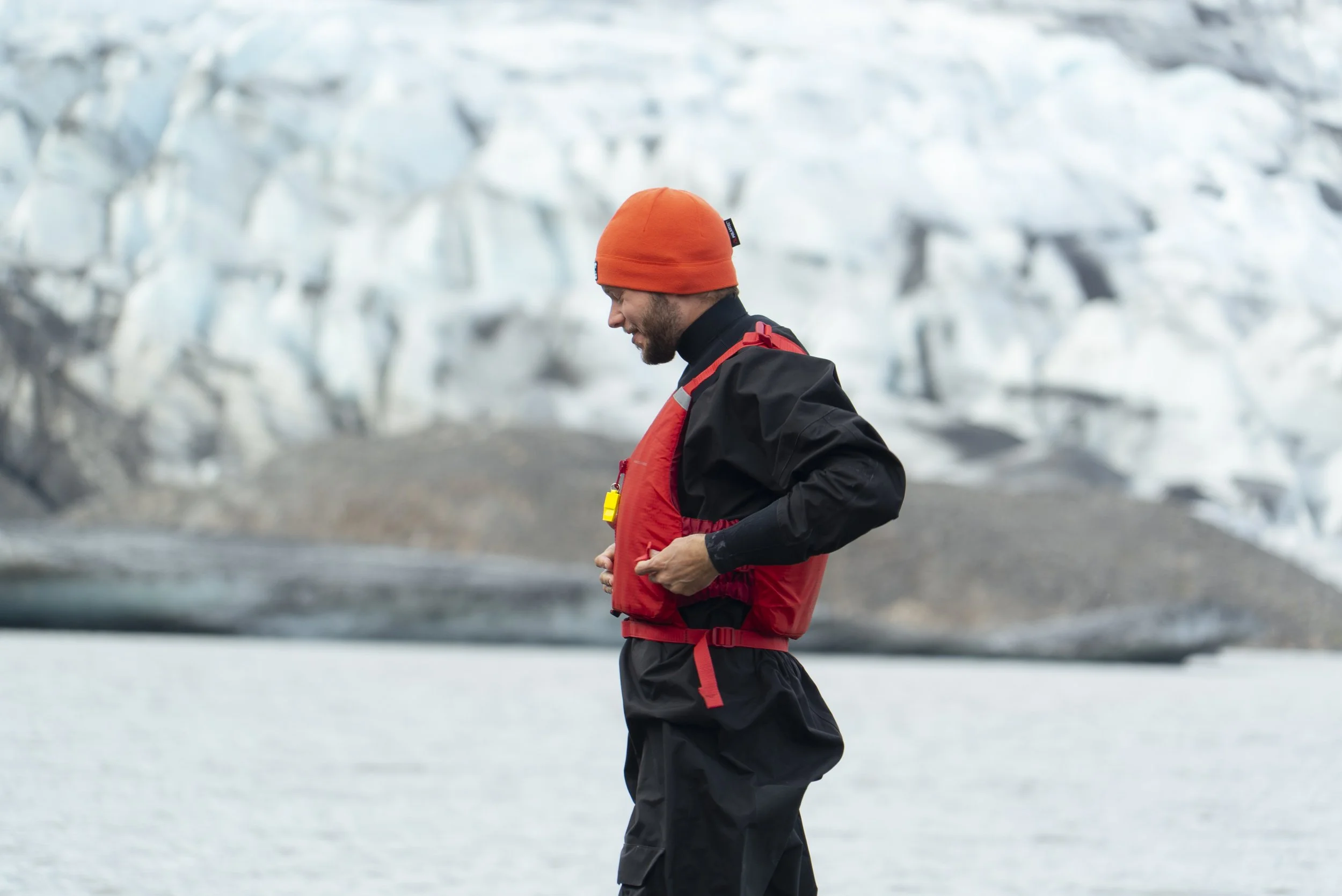
Next, you’ll get the equipment to keep you dry and comfy on the water: drysuit and water shoes. These come in a range of sizes (S – XXL drysuits and 36 – 48 shoes). Please note that the drysuit is an essential piece of safety equipment in 2°C (35°F) water, and you must be able to fit into the drysuit to take part in the tour.
After driving to the tour location (approx. 30 mins), your guide will give you an introduction to the area and go over the plan for the day.
Setting out
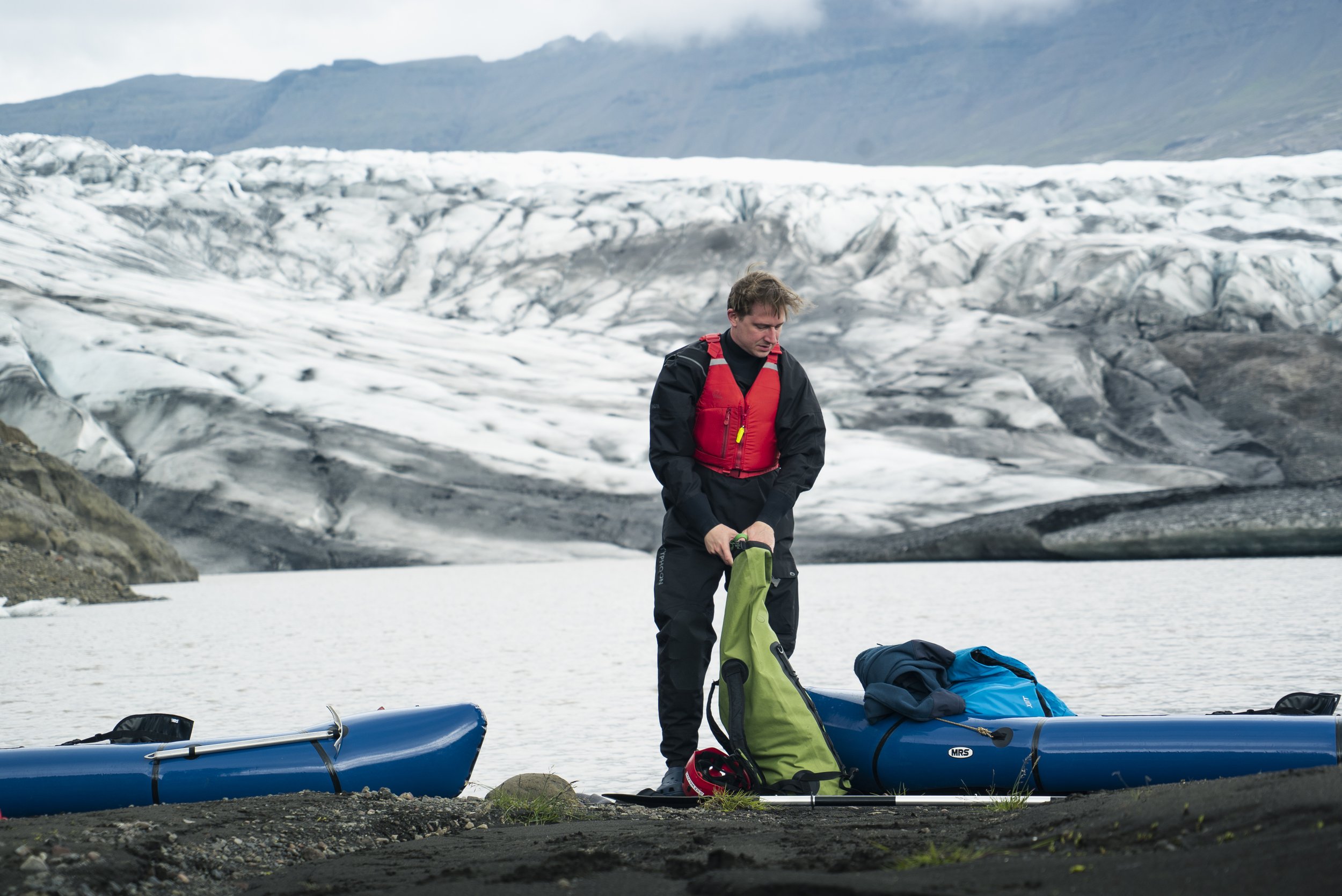
Upon reaching the water, we inflate our boats and get everything ready for paddling. In our full day tours, we provide dry backpacks to store your gear in, however we recommend that you bring drybags if you have them. Most of your gear will stay inside the backpacks, but we recommend keeping your phone in your PFD chest pocket, so it is easily accessible for photos. We also recommend keeping a pair of gloves tucked into your PFD, and a bottle of water loose in the boat, by your feet.
You’ll always get a safety briefing and paddling instruction before heading out on the water. Paddling next to icebergs and glaciers is not without risk, and we want to enjoy this amazing environment in a safe and stress-free way. It’s important that you respect the instructions of your guide and adhere to any requests or rules laid out.
Safety
What are the risks when kayaking next to glaciers and icebergs, and what can we do to mitigate them? We take safety very seriously, and our extensive experience and local knowledge gives us a solid foundation to assess and reduce these risks.
The first and most unavoidable risk is that of cold water. Water temperature is often 2 – 4°C; immersion in such cold water would lead to hypothermia in just ten minutes. Therefore, we wear drysuits with warm layers underneath, which provides thermal protection to give us plenty of time to re-enter the boat in the event of capsize.
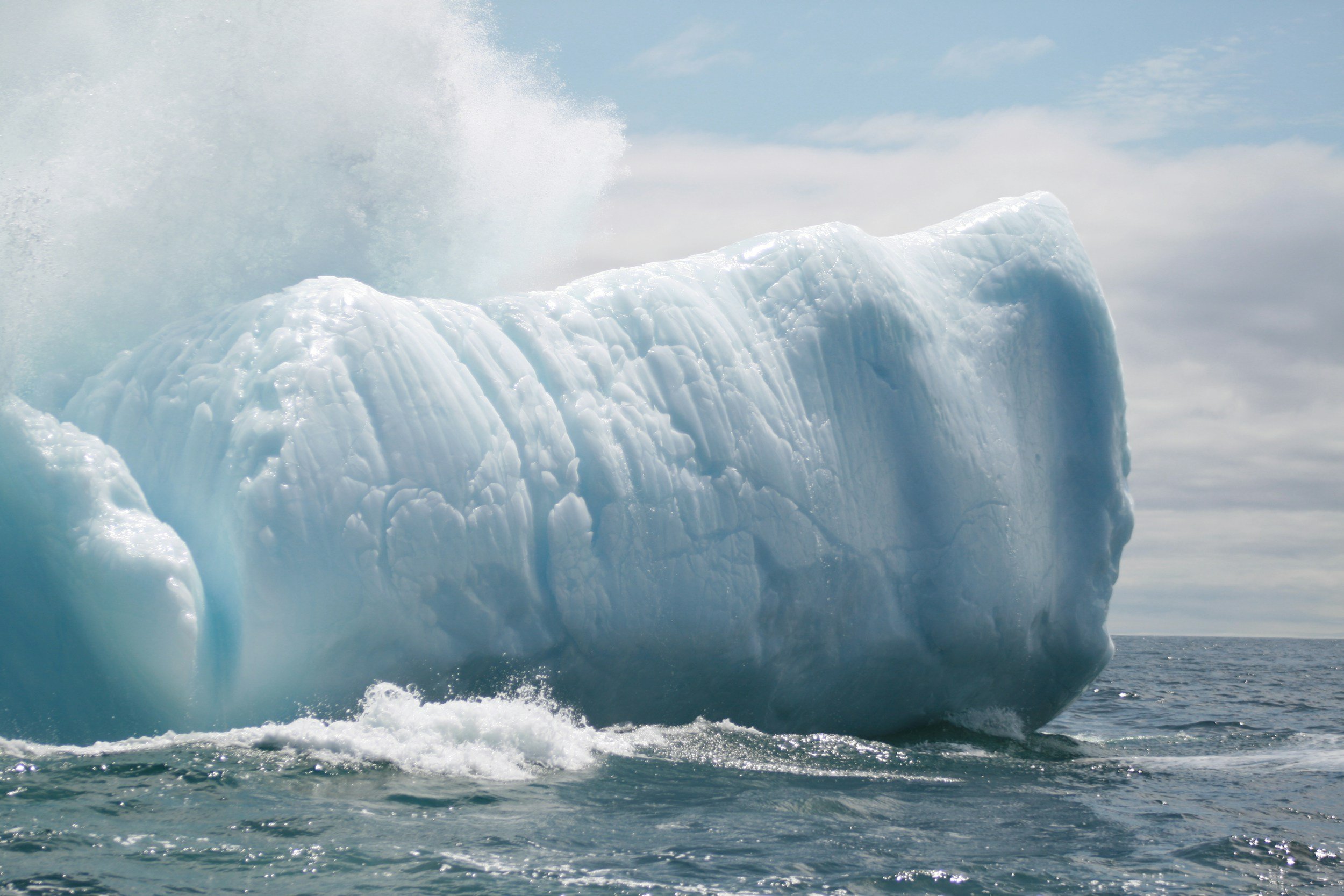
The second major risk factor is the ice itself. Overhanging ice may break off, icebergs flip and new icebergs detach from the glacier. We never want to paddle beneath unstable ice structures for fear of it breaking on top of us. The risk of icebergs flipping and breaking is complex and difficult to predict. Therefore, it is a good rule to steer well clear of large icebergs and avoid enclosed spaces with ice on all sides. Depending on the depth of the lake, we want to keep a good distance from the glacier front- new icebergs breaking off can often project much further into the lake than icebergs that roll. Safe route-finding is too complex to be explained in a single paragraph, so it is imperative that you follow the route your guide is taking between the icebergs, and follow instructions closely.
The final risk factor is really an amalgamation of other factors which are exacerbated by remoteness: relatively minor injuries can turn into larger issues when we are far from road access. This is why we always carry a stocked first aid kit, have wilderness first aid trained guides, and have satellite communications devices to be able to call for assistance when out of cell phone range. We hope never to have to use these, but we need to be prepared for the worst!
Tour difficulty and required fitness
All our activities are human powered, and our full day tours are aimed at active people. Whilst no individual part of the tour is especially hard, spending 6 – 7 hours outdoors can feel tough for those not used to it. We try to keep the intensity low, to allow us to enjoy the scenery which we are passing through, but there is no cable car to get us up the hill, or hidden motor on the kayak: our guests must be able to hike 5 – 10 km with backpacks and paddle for 1 – 2 hours. Although we need a certain level of basic fitness, don’t let this put you off (we’re not looking for athletes!). If you’re the type of person that has come to Iceland and planned a few hikes which venture an hour from the car, have some uphill and go over uneven ground, our tours will likely suit you well.
Paddling experience is not a necessity for our tours, but it does help. If you have zero paddling experience, then you may need a higher level of fitness to keep up compared to someone who has extensive kayaking experience.
Best time to go?
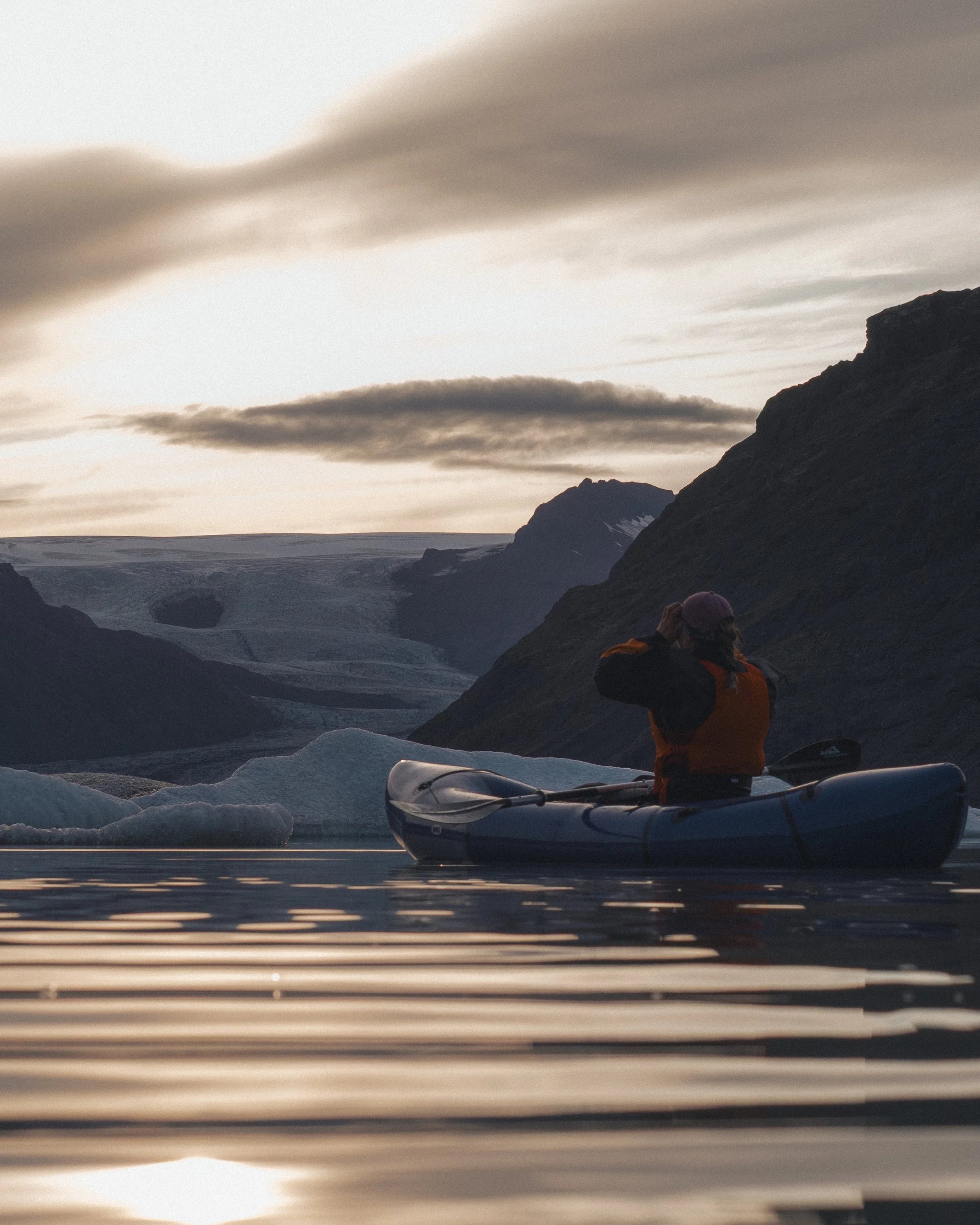
Many of the glacial lakes we visit freeze during the winter. Usually, they have thawed completely by the end of April, which allows us to start running trips in the middle of May. Based on extensive experience in the area, we choose to operate kayak tours during the period 15th May – 15th September. Outside this timeframe we only accept requests for private tours, with the caveat that there is increased likelihood for cancellations due to weather.
It is worth mentioning that the weather in Iceland can be unpredictable at the best of times, and sometimes we need to cancel due to weather even in the middle of summer. Where possible, we will try to offer an alternative e.g. alternative location, hike instead of kayak etc.
Summary
So, there are the basics of our tours kayaking and hiking around the glaciers and lakes in Vatnajökull National Park. If you have any questions, feel free to get in touch using our Contact Form.