
A Dying Glacier
Heinabergsjökull is a long valley glacier which descends from the Vatnajökull icecap in southeast Iceland. Since 1950, it has terminated in a lake called Heinabergslón.
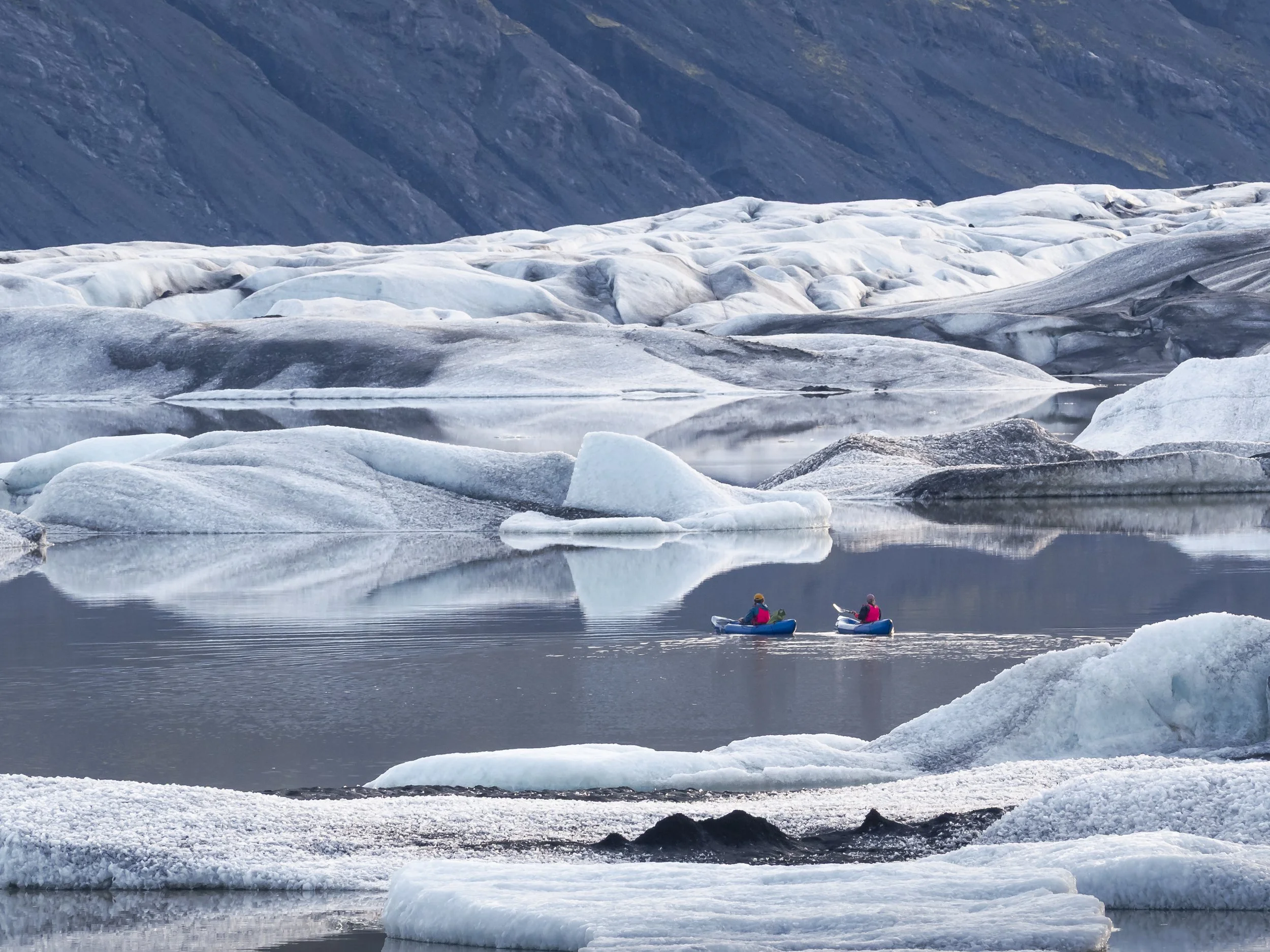
Kayaking between the icebergs at Heinabergslón
The lake has formed in a huge depression, carved out during previous ice ages and eroded further by frequent, massive glacier floods which flowed beneath the glacier during the “mini ice age” from 1700 - 1900.
It is hidden away down a 12 km long dirt-road, which keeps the crowds away. Once you hike away from the modest carpark, you are unlikely to meet another soul. This makes it a fantastic area to experience that which makes Iceland so special: huge landscapes, breathtaking nature and the absence of human impact.
However, like many glaciers in Iceland, rapid changes are occurring at Heinbergslón. A warming climate saw the glacier front melt approximately 2 km between 1890 (its maximum recent extent) and 1946 (shown in the first image below).
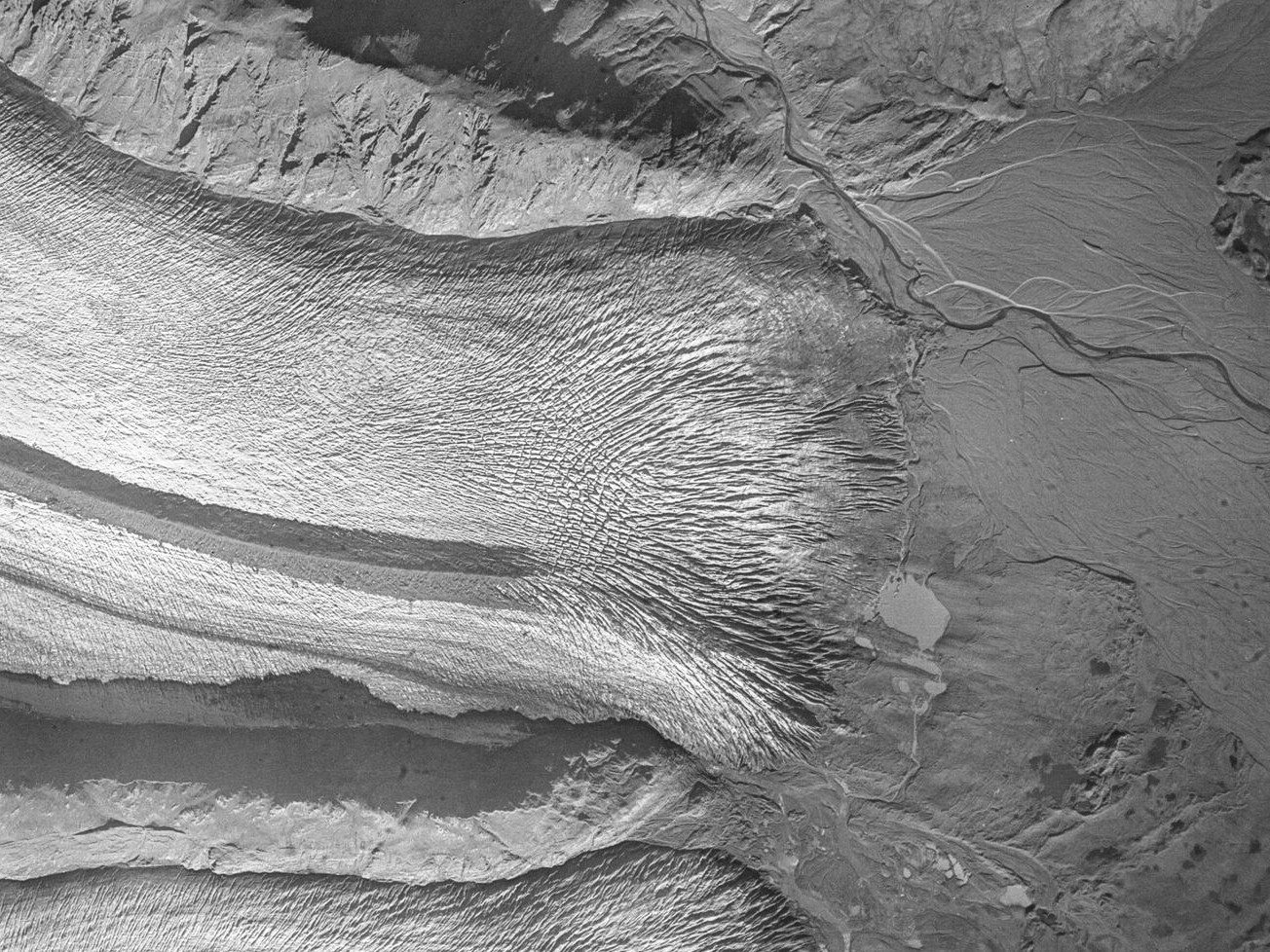
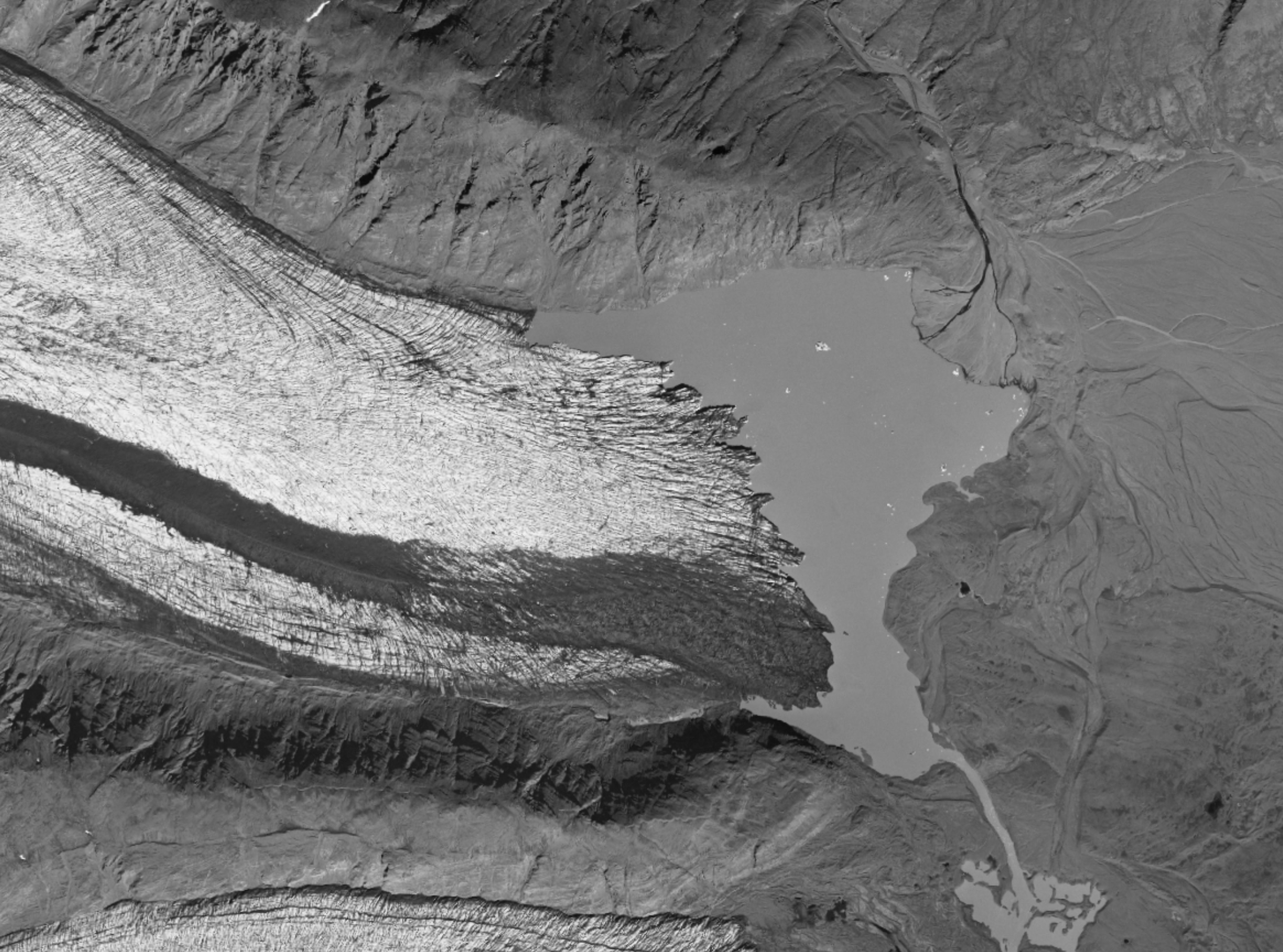
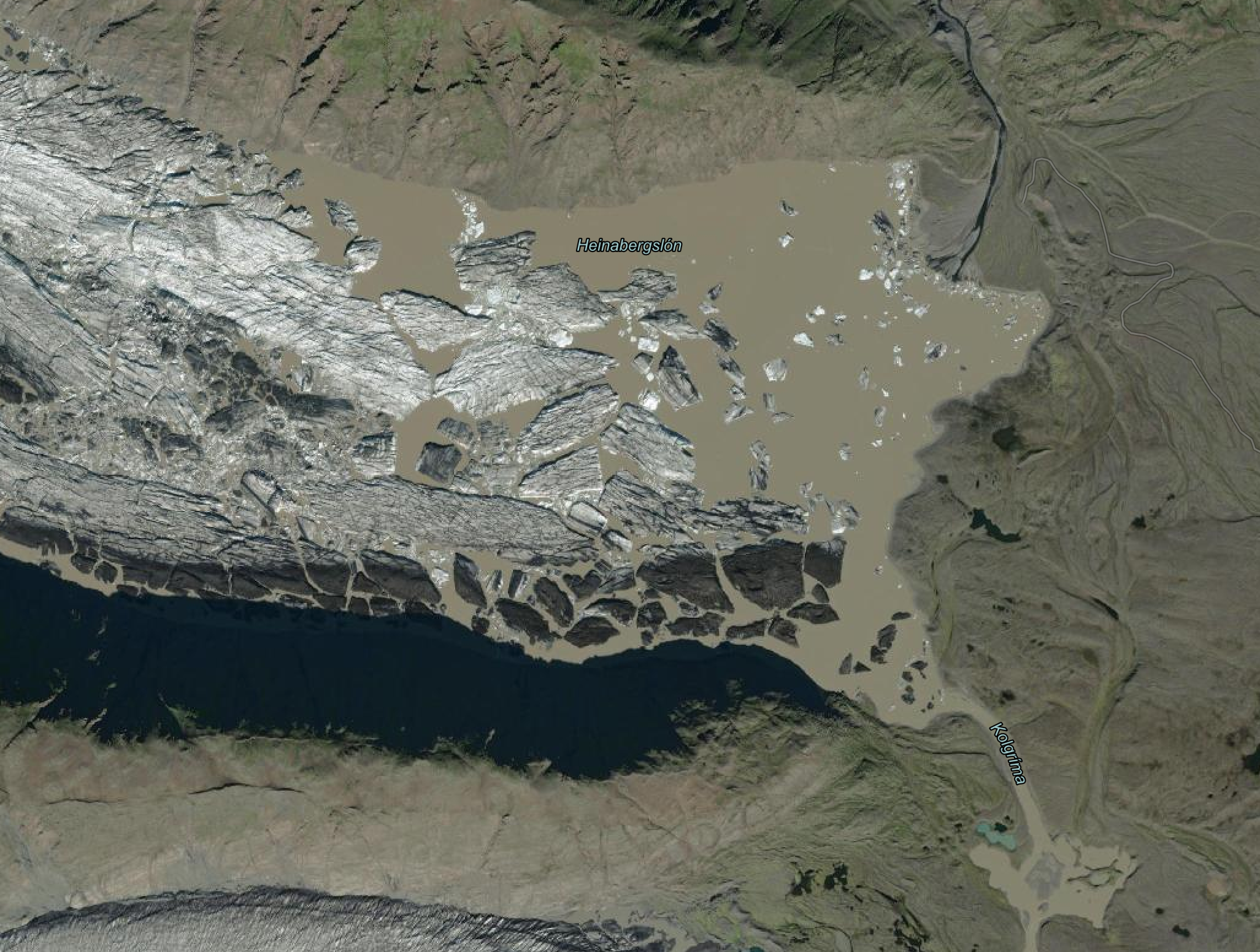
a) Heinabergsjökull, 1946. The glacier terminus reaches the modern day carpark, and the lake is yet to begin forming. b) Heinabergslón, 1989. The lake is growing, but the glacier still appears as one solid mass of ice. c) Heinabergslón, 2024. The mass of ice has fragmented, making it difficult to assess where the front of the glacier lies.
Although the above images may paint a picture of alarming instability, on the shorter timescale of everyday life, the glacier and icebergs at Heinabergslón seem quite stable. The larger icebergs can remain in similar shapes, orientations and locations for multiple years. This is due to the cold water temperature; the pure glacier melt that fills Heinabergslón is between 0 - 2 degrees celcius, even at the height of summer, which means that the icebergs melt mainly due to warm air and solar radiation from above.
As the icebergs at Heinabergslón melt from the top down, they become smooth and rounded. This makes it easy to see when one of them breaks or rolls, as jagged shapes emerge in the upturned ice. These jagged shapes are then slowly softened by the sun.
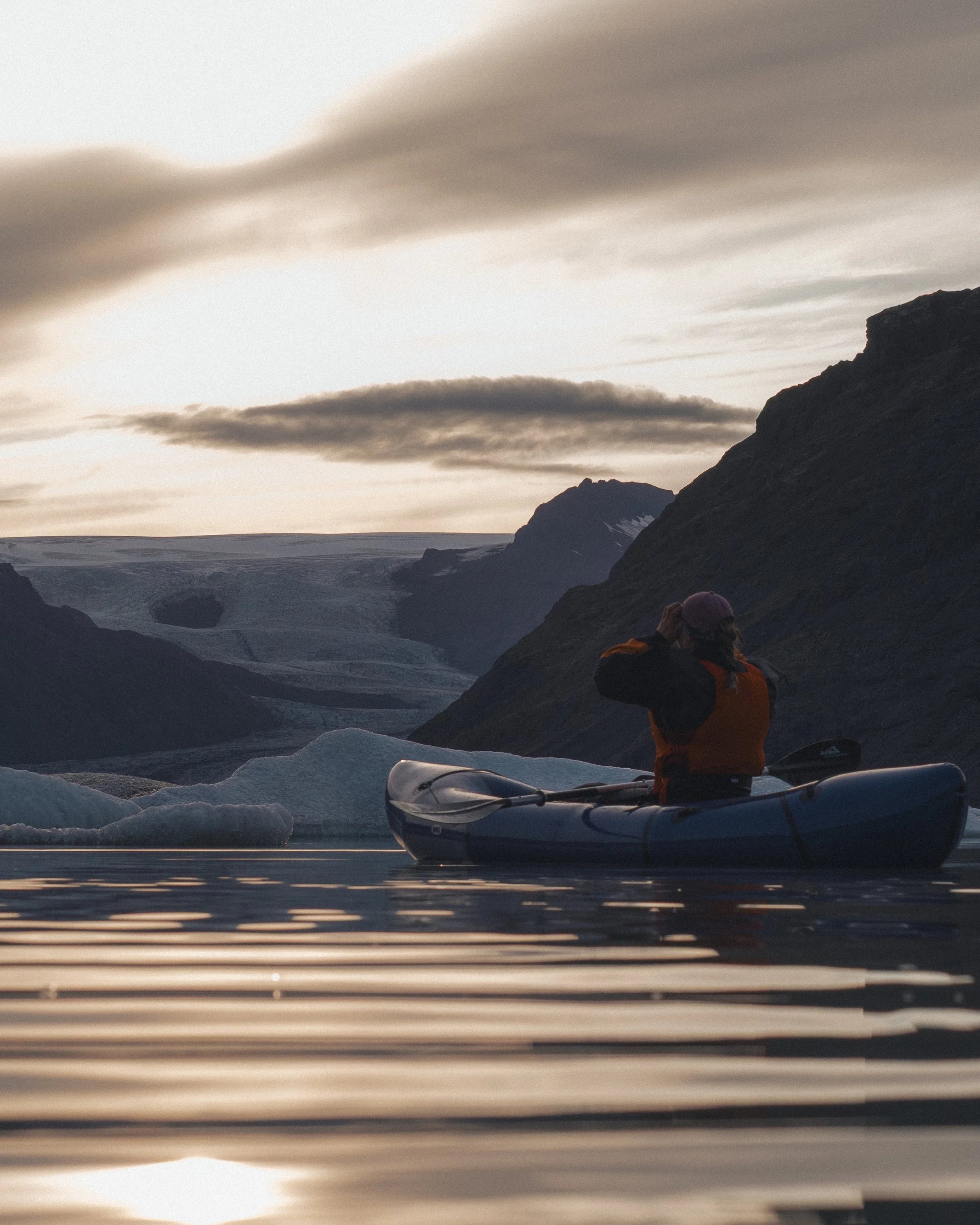
Midnight sun at Heinabergslón
When we visit Heinabergslón, one of the oustanding impressions left on our guests is that of the stillness and solitude of the place. Time seems to stand still. Amidst the quiet, it is difficult to imagine that the ice could ever move, or the violence and power of such an event. Sometimes, however, something will give. Once or twice a year, we see the effects of large calving events: huge icebergs which have broken, flipped and disintegrated, moving hundreds of thousands of tonnes of water in the process.
We were lucky, or perhaps unlucky, enough to witness such an event in August 2025. After climbing to the shoulder of the adjacent mountain Hafrafell, as we sat to eat some lunch and gaze out over the glacier and lake, cracking sounds began to emanate from the glacier. I’ve spent enough time around glaciers to know that this is usually the signal to get your camera out and hit record. What came next was an incredibly powerful, sobering experience as we bore witness to a glacier disintegrating before our eyes.
I believe that this is the first major calving event caught on video at Heinabergslón, the whole thing lasting around 6 minutes.
The next video shows subsequent calving, rolling and general iceberg mayhem triggered by the first event shown above.
Although the insane power of the ice is evident in the videos above, it is easy to miss the huge cracks that developed in the glacier slightly upstream: icebergs as big as 200 m long have appeared to detach completely from the glacier tongue.
For the first time in many years, it seems like there is a definite point that we can observe as the terminus of the glacier, and the beginning of the lake, approximately 5km back from the reaches of the solid mass of glacier we could see in the picture from 1989.
Compare this to the neighbouring glaciers Skálafellsjökull and Fláajökull, which have retreated approximately 1km in the same time period, and it is clear that we are witnessing the complete collapse of Heinabergsjökull.
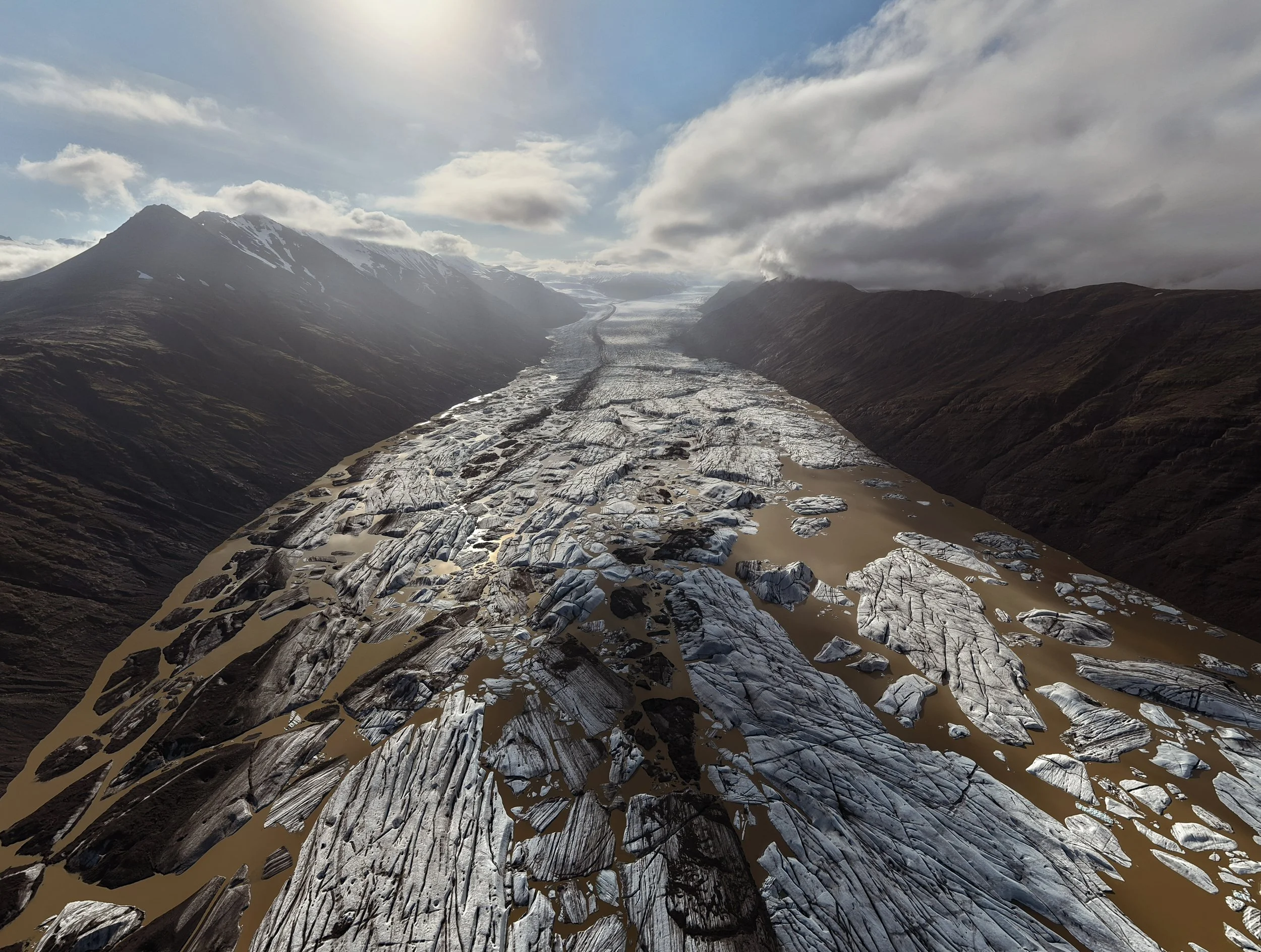
Heinabergsjökull, June 2026
So, what is happening at Heinabergsjökull compared to its neighbours to cause this collapse?
It is likely due to the topography of the underlying bedrock. The glacier fills a long, flat valley which has been eroded to a maximum depth of 220m. This results in a large proportion of the glacier, a huge amount of ice, lying below the glaciers equilibrium line; the balance point between new ice forming from snow at higher elevations, and old ice melting at warmer, lower elevation. As the climate warms and the equilibrium line rises, this has made Heinabergsjökull especially sensitive to the increase in average temperatures.
The massive trench that Heinabergsjökull filled, created by erosion during previous glaciations, filled with water as the glacier retreated. Eventually, the front of the glacier started to float and then break up into icebergs. As these pieces break down, the surface area to volume ratio of the ice increases and the rate of melting will increase. Many small pieces of ice will melt more quickly than one massive piece.
The future of Heinabergslón?
We can look to Sandfellsjökull, an outlet glacier on the eastern side of Mýrdalsjökull, to see the possible future of Heinabergsjökull. A lake grew as meltwater filled an overdeepening. This filled with icebergs as the glacier terminated into the lake and then the glacier retreated onto land and the icebergs disappeared. All of this happened in just 15 years. Whilst this is a smaller scale and shorter timespan than we would expect at Heinabergslón, the sequence of events will be the same. Eventually, the glacier will retreat onto dry land and, once the remaining icebergs have melted away, an ice free Heinabergslón will fill the valley.
The event we witnessed in August 2025 was one step on this seemingly pre-determined pathway. Witnessing such events is both awe-inspiring and devastating: much like Heinabergslón itself, paradoxical that the collapse of our natural environment gives rise to something so beautiful.
Further reading:
www.glacierchange.com/en/heinabergsjokull
Hannesdóttir, H., Björnsson, H., Pálsson, F., Aðalgeirsdóttir, G., and Guðmundsson, Sv. (2014). Area, volume and mass changes of SE- Vatnajökull ice cap, Iceland, from the Little Ice Age maximum in the late 19th century to 2010. The Cryosphere Discussion 8, 1-55.